Sermon Notes
Download Notes (.docx)
Acts 2:1-41 (NRSV)
Written by Rev. Dr. Alf Halvorson
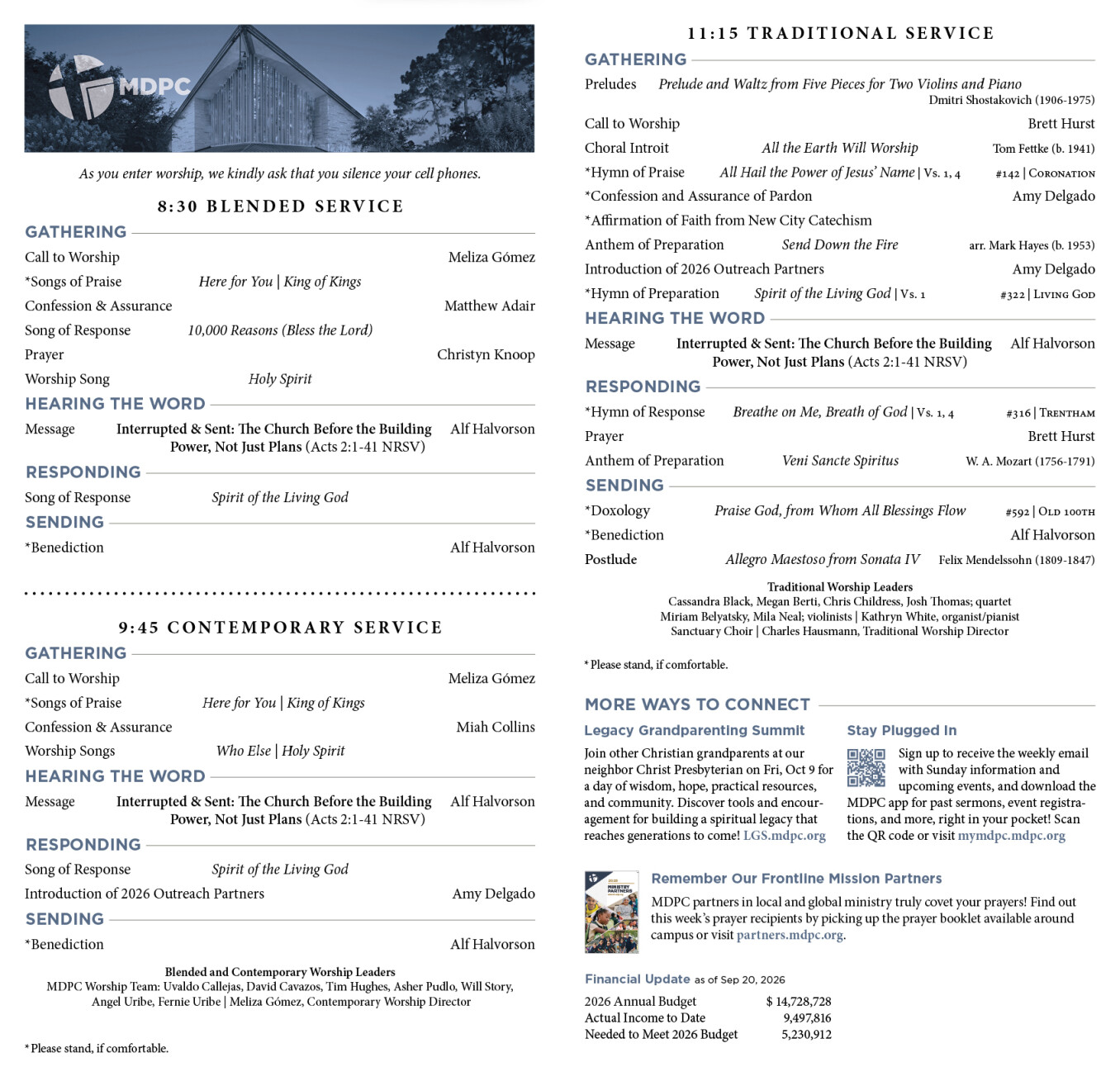
This message reminds us that the church becomes fully alive not through buildings, plans, or human strength alone, but through the power and presence of the Holy Spirit. As you reflect on Pentecost and the examples of faithful people and ministries in the message, consider where God may be interrupting, renewing, and sending you.
- What stands out to you most in Acts 2:1–41, and what does it reveal about the work of the Holy Spirit?
- As you consider Peter’s sermon and the people’s response, what speaks to you most? Have you called on the name of the Lord, as described in verse 21? And when was the last time you were “cut to the heart,” as the people were in verse 37?
- Where have you seen a person, church, or ministry move from being a “shell” to becoming alive again?
- Why can a movement of God become a “museum”? What helps a church or organization stay rooted in its calling while responding to new needs?
- Which example in the message—Moses, Nehemiah, Mary, William Carey, or William Wilberforce—speaks most directly to you, and why? Is there a contemporary example that challenges, inspires, or reshapes your thinking?
- Where might God be calling you to become more open, available, and expectant? What could one faithful “yes” look like this week?